This is quite a huge episode with big implications that most people will miss due to it requiring good retention of details from previous episodes across seasons. Even if the Reid and Julius fight had uneven animation, there was still powerful character work during that fight and many scenes that resonated with me due to showing character consistency from this season.
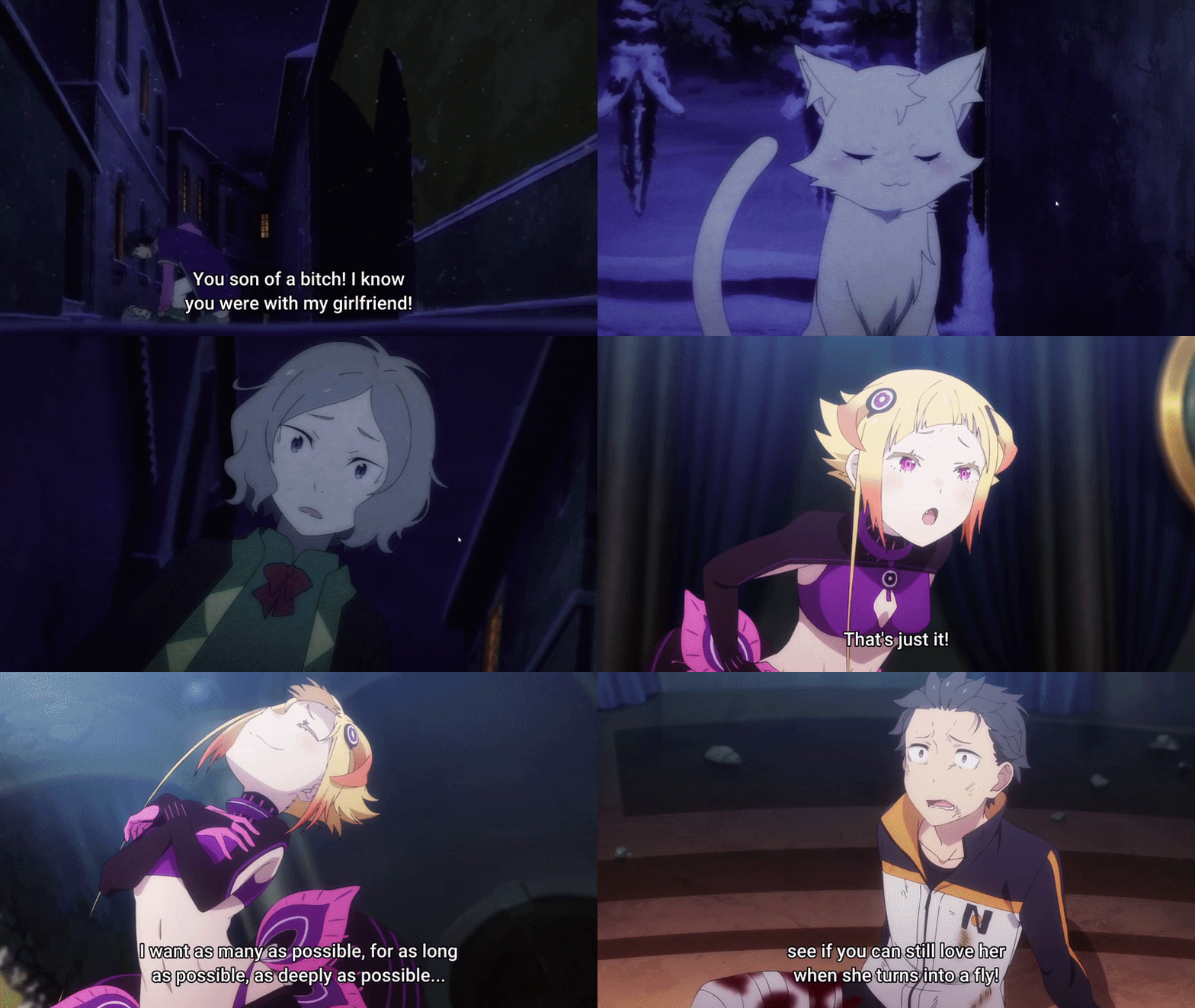
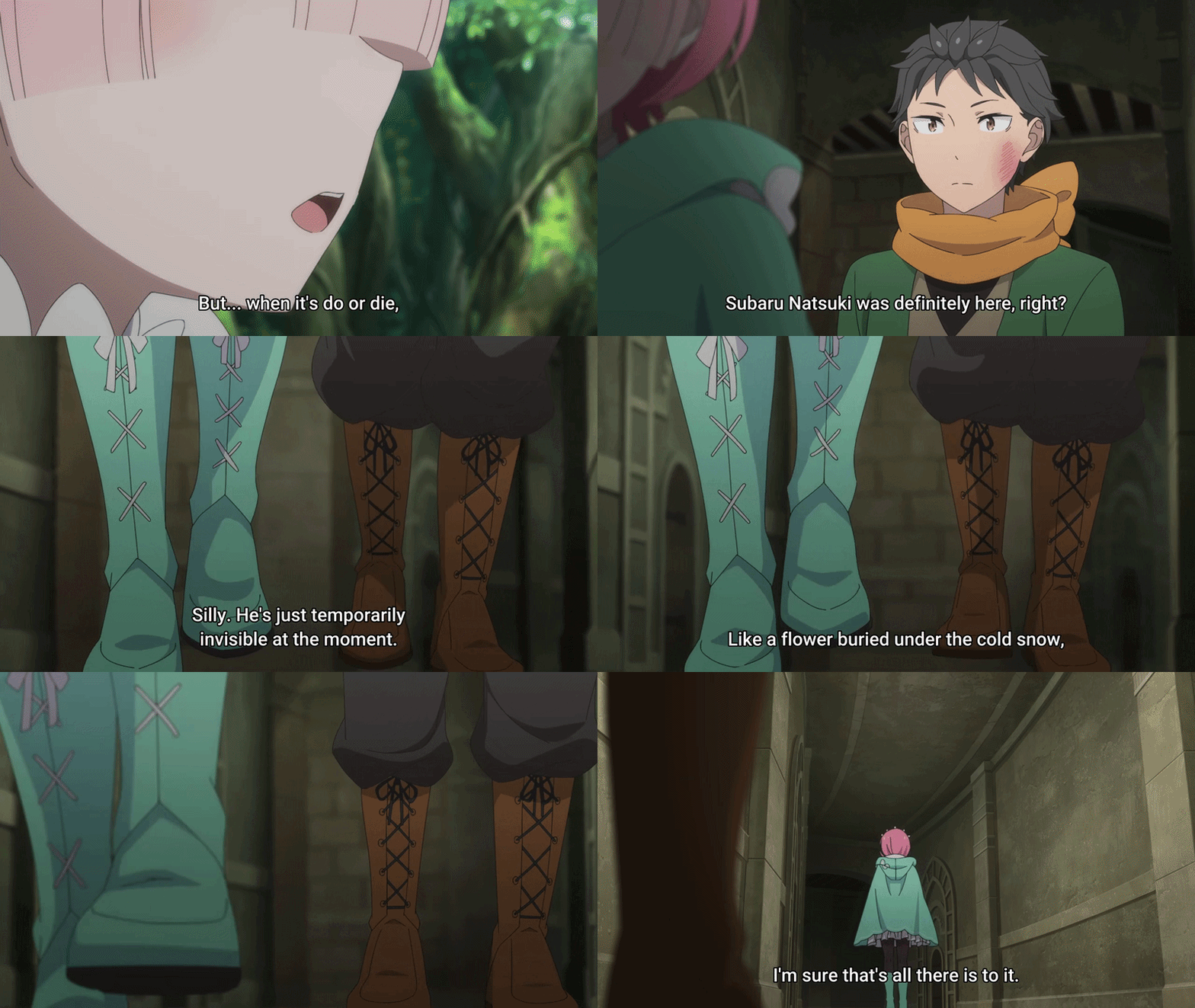
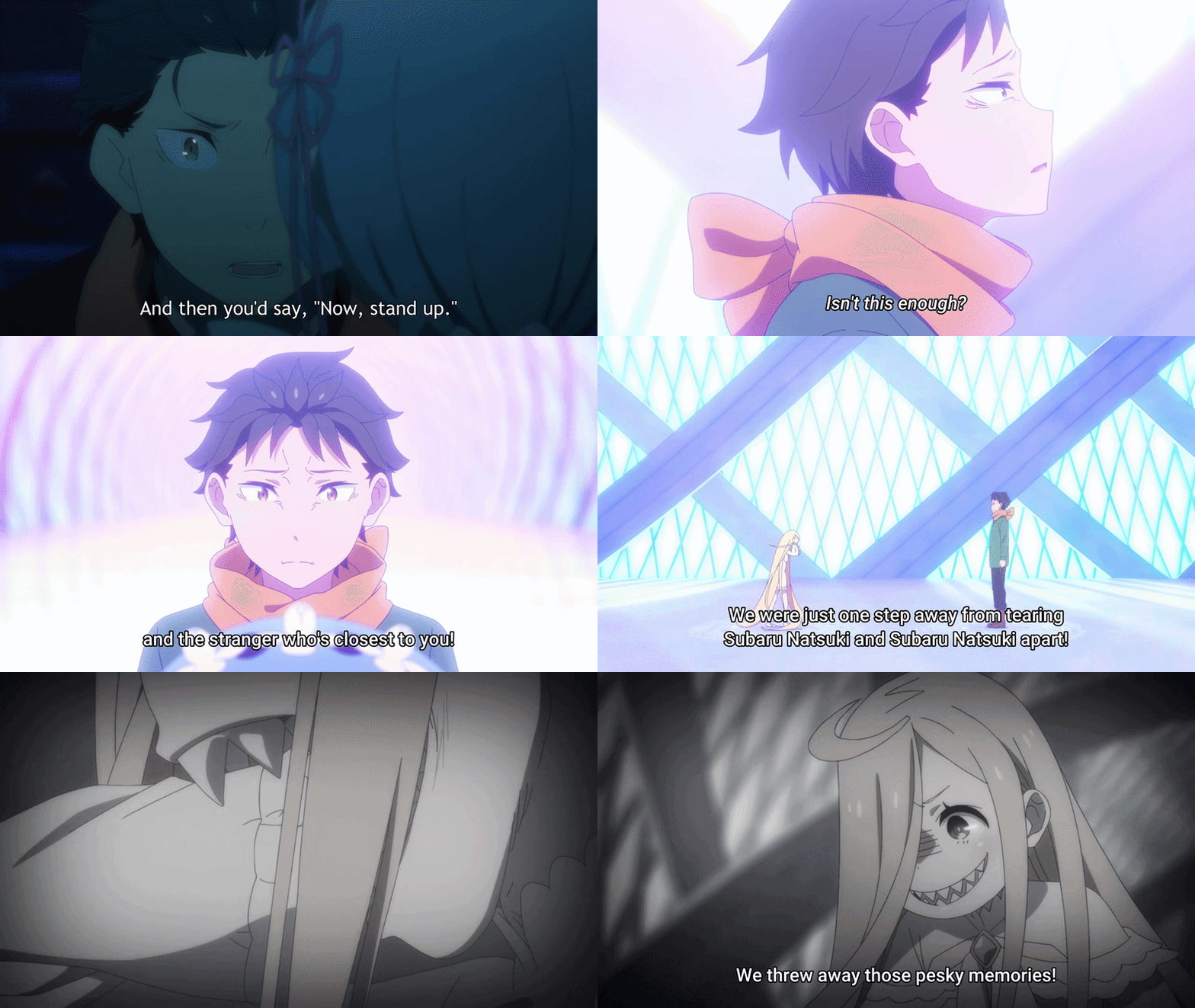
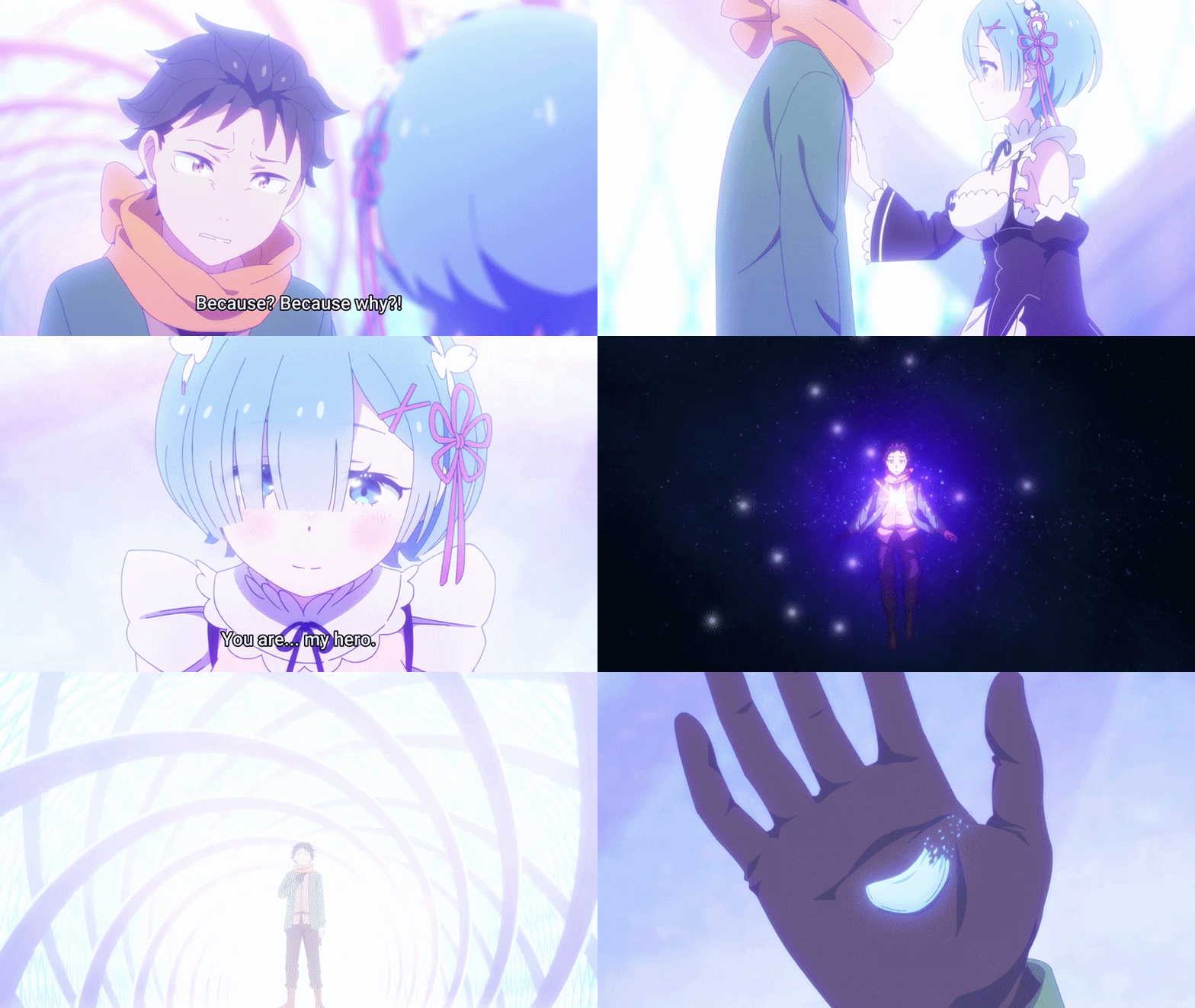
The episode starts with Emilia’s reaction from the previous episode being replayed again to ensure that it flowed well with Lye calling her out for lowering her guard, only Emilia was more dialed in than usual ’cause her Subaru’s back, and she landed a heavy blow on Lye due to him thinking Emilia had become easy pickings, resulting in him getting away after his feet touched the ceiling due to Dorkel’s Teleport. Emilia then rushes to hug Subaru, overjoyed that he’s back, before she calls him a jerk repeatedly due to having lost his memories, which caused her a lot of distress, as shown by Ep. 74, and then she settles down and asks if Subaru is whole again, which he explains with a confident yes while also telling her that the amnesiac Subaru still lives on through him after Emilia brought the latter up, which is very much what I expected since Tappei does know a thing or two about dissociation. Then Subaru uses his Authority of Greed to search for Beatrice, probably ’cause Betty is his spirit partner, making their relationship really important.
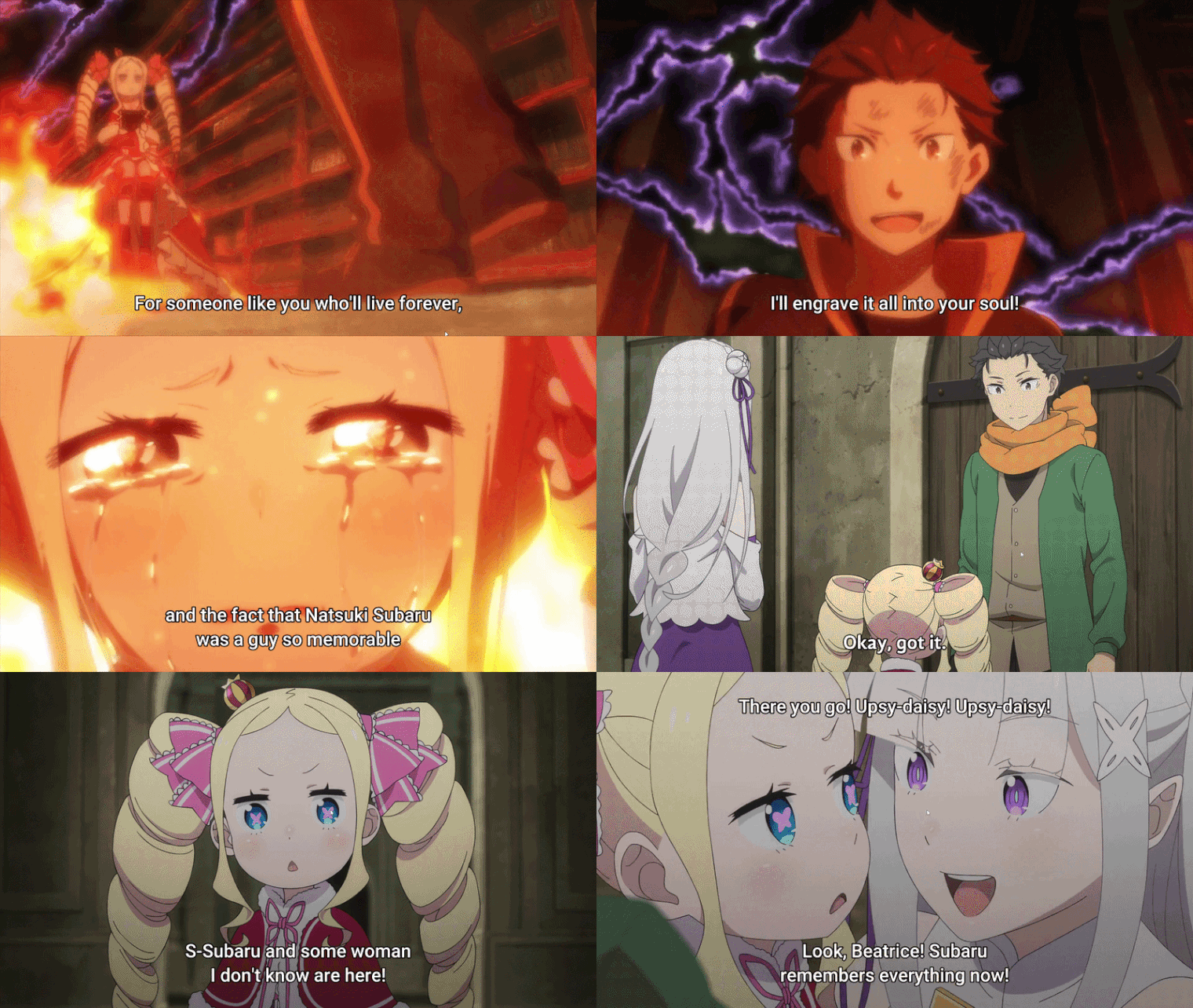
When the pair arrive, they shower Beatrice with affection, and this is not surprisingly regarding Emilia since Beatrice had indicated she’d be sleeping with Emilia and Ram in Ep. 73 before Subaru had lost his memories, so Emilia had likely gotten close to Beatrice in the one-year time-skip between Season 2 and 3 after Subaru saved her from being suicidal, and it was a joy to see Emilia celebrating the return of the Subaru and Beatrice spirit and spirit contractor duo. Of course, Beatrice has no idea why this is happening given Emilia had her name eaten in the previous episode, and she’s of course glad Subaru’s back, as is Ram, and even Patrasche who gives him a shove with her mouth, to which he replies that it’s been a long time he’s gotten such a tsundere response ’cause Emilia had stopped doing that in Season 1. Emilia then reintroduces herself to the others, and the group agrees that they can’t lose to the Sin Archbishops of Gluttony.
Subaru then explained everything to them offscreen before announcing that the four obstacles at the tower are the two Gluttonies with Reid being included as part of Roy, Shaula, and the rampaging mabeasts with him thinking to himself deeply that the Witch of Envy may be done as a problem ’cause it was Rui’s knowledge of Return by Death that caused her to appear at the Pleiades Watchtower, which is what I’d speculated, although I didn’t expect Rui to be out of commission that easily with her either being overwhelmed by Subaru’s memories of death to the point of losing her self or outright being dead. Emilia then asks Subaru whether he’s being pulled hither and thither ’cause of how deep in thought he looked, showing just how much care she’s showing to him now even though we lost the loop in which she confessed her love for Natsuki Subaru, but it shows a nice continuation of her character this season. When he responds that it’s an expression he hasn’t heard in a while, she pushes him to say it again since it very much distinctly reminds her of him, and he says he’ll do it later ’cause the current situation is basically a war between camps, and he’s directing Ram to do something that won’t be clear until later in the episode.
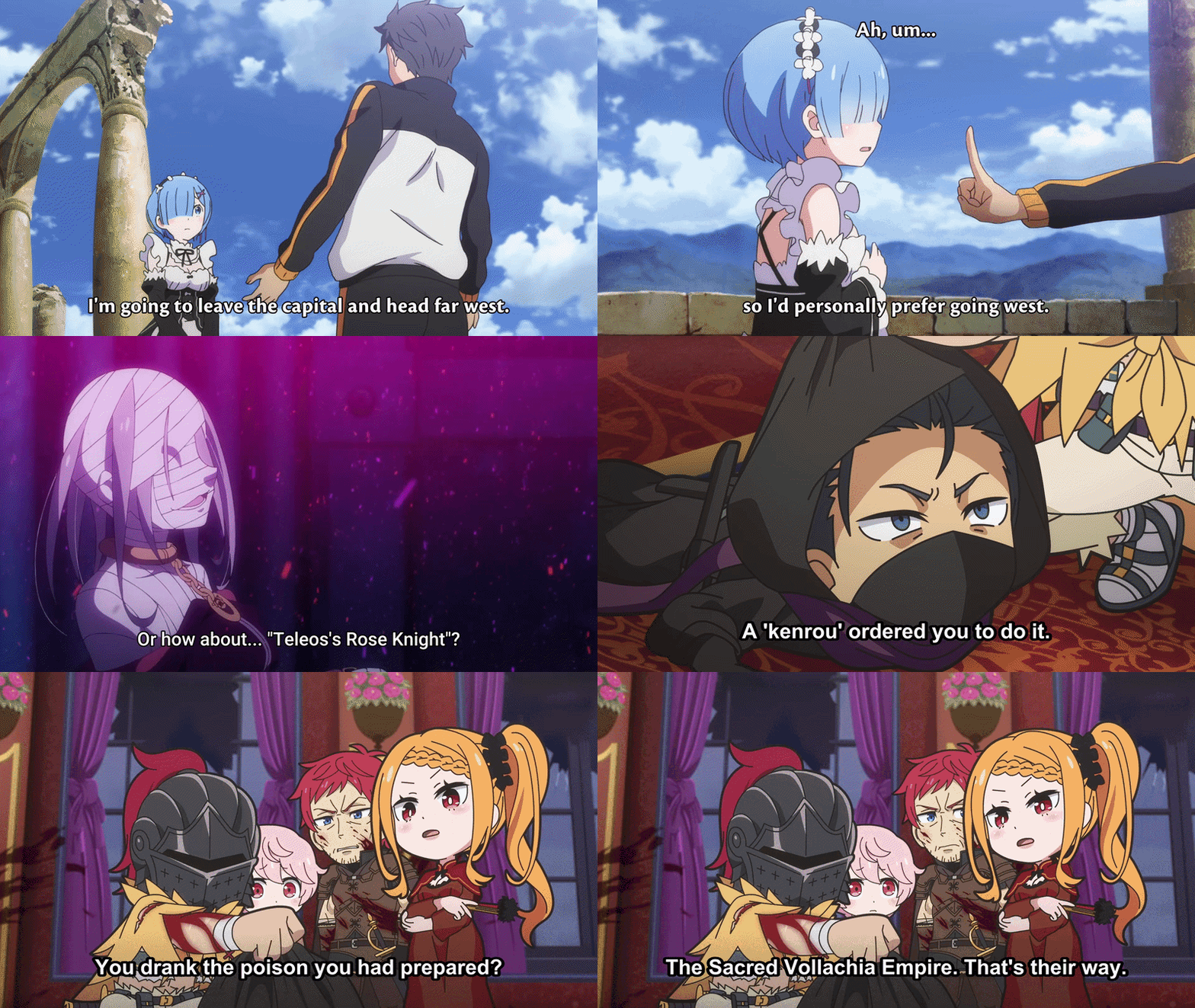
Shaula is with Foxidna and Meili and a rule has been broken, which means she will transform into her scorpion mabeast form soon. Subaru and Beatrice then arrive, and Shaula asks him to kill her, which he replies by saying that there’s no need for her to call him master and that he desires to save her. And the timing of this transformation is very suspect and pretty much confirms what I’d expected from Season 1 on Return by Death, which I’ll get into after finishing talking about this scene. She then transforms, and Emilia, who seemed to be hiding out just so that she could knock Shaula off the tower by taking her by surprise, kicked her right off the outer part of the tower. Foxidna of course realizes that Subaru’s back given the look on Beatrice’s face. Subaru then tells Foxidna about her lack of memories about Emilia being Gluttony’s doing and suggests that she get herself to Julius’s side, probably ’cause he knows how much being Anastasia’s knight means to him. She doesn’t doubt Subaru when he says that he’s already discussed with Emilia what to do and that he and Beatrice will handle the scorpion and then asks if he has something to say to Julius, which personally I find suspect given Subaru responds by saying that Julius doesn’t need to be told anything, much like he’d done during his chat with amnesiac Subaru, perhaps suggesting she deliberately pushed Subaru into giving Julius a message given the shocked look on her face on him having another to say to Julius. After Subaru indeed says that he has something to say to him, which I paraphrase as how he needs to hurry things along to help the others, Foxidna’s satisfied and heads off to the second floor. Subaru then tells Emilia that the key is her, and she tells him not to die due to how much she cares about him now given she’s fully in love with him. He then tasks Meili with helping him and Beatrice face off against Shaula and stopping the rampaging mabeasts, of which there are probably less of them now that the Witch of Envy isn’t showing up, assuming Subaru’s correct.
As for why the timing of Shaula’s transformation is suspect since it also means the timing of a tower rule being broken was different than that of what it usually was, Reid being eaten by Roy is something that usually happens much faster than this, and Subaru had spent quite some time reading his Books of the Dead, going straight to Emilia, then going to Beatrice, Ram, and Patrasche with their happy reactions before explaining all the things he did to them off screen in addition to further talking to Ram offscreen before he starts to make his way to Shaula with Reid only having been eaten at the exact moment Shaula indicated a rule had been broken is extremely particular given Subaru arrived not long after that, meaning Subaru either gained a lot of time to do things and/or Reid was sandbagging with future knowledge, possibly due to a connection with Echidna with those two things not being necessarily mutually exclusive. Most people would call this a plot hole, but I know better than that due to how much care Tappei puts into Re:Zero. What this suggests that is that due to how many times Subaru had died died in Ep. 81, Subaru’s savepoint at the archive in Ep. 83 had been warped as if he’d possibly arrived somewhere between fifteen to forty-five minutes sooner compared to the start of Ep. 81 due to the full power of Return by Death not just bringing Subaru back to a certain point but warping the reality of the savepoint as if he’d arrived between an indeterminate number of seconds to a few minutes sooner each time he dies as was hinted at by nearly every death Subaru had in Season 1.
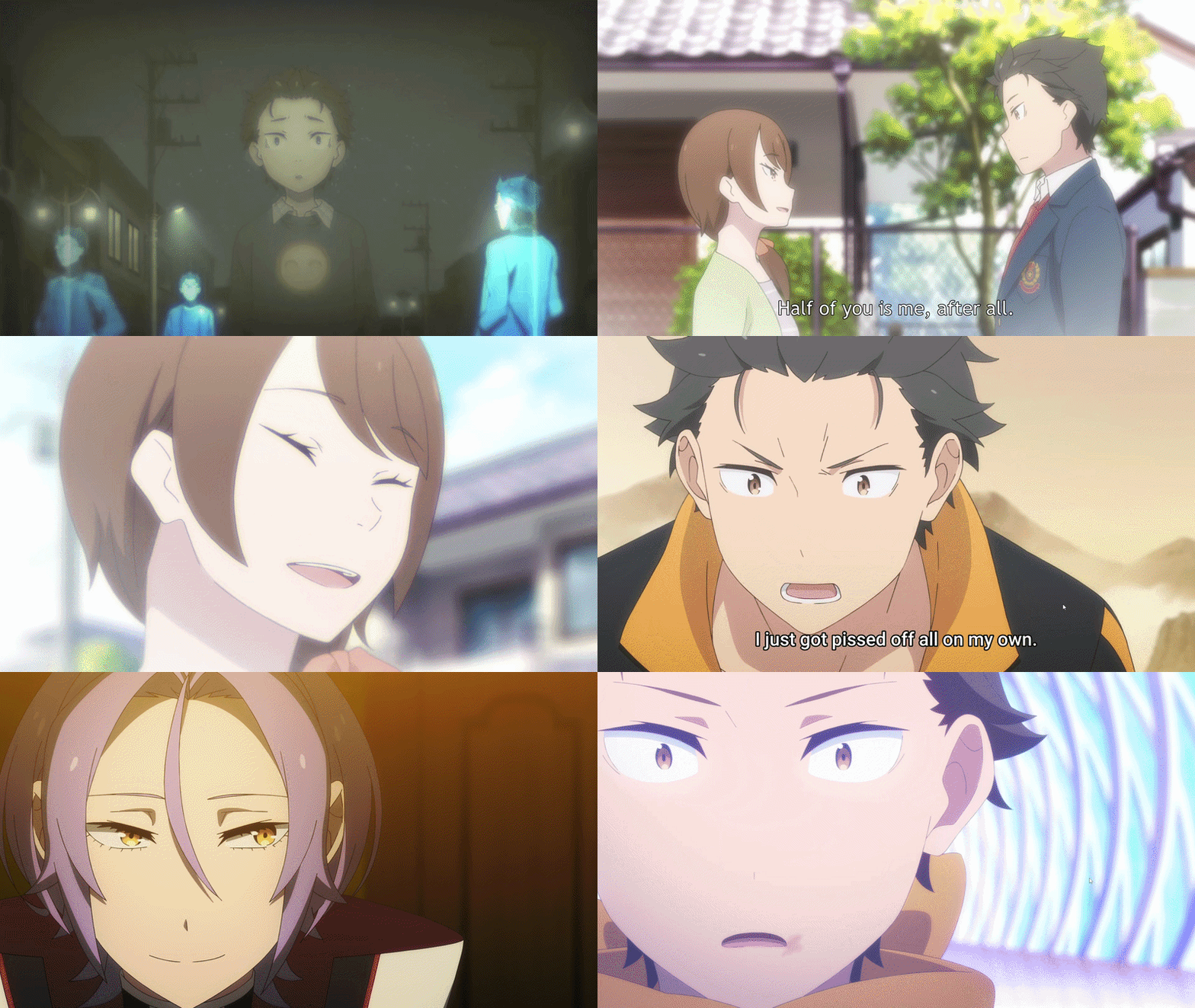
To rehash some of what I’d posted regarding Ep. 79, Subaru’s Authorities could be shaped in part by the biggest regret of those in the dark world assuming my theory about this is sound, such as how Petelgeuse deeply regretted using his Authority to hurt and kill Fortuna when he’d intended for it to protect her, and that’s likely why Subaru gets recoil from offensive uses of Invisible Providence, how Regulus’s biggest regret being how he failed to understand how unhappy his first wife was, making him believe he was a failure for dragging the one he cared about most into despair, and that’s why Subaru’s Authority of Greed allows him feel what others feel (Rem imparting her love and admiration for him in Ep. 79) and probably allow others to feel what he does (unconfirmed) since Regulus genuinely desired connection, and how Rui’s biggest regret may be eating so many memories just to experience suffering, never finding that one “rosy” life, which she doesn’t enjoy, and if she could get a do over, she’d prefer to only eat a small piece of someone so that she could eat only a good part, such as someone’s shining moment, and that will have made her believe life was worth living instead of having those highs accompany the lows, which Subaru himself sussed out himself given he’d told her to not run from her suffering, meaning Subaru’s Authority of Gluttony could be eating a small piece of a name or a small piece of someone’s memories.
The long and short of it is I believe that Subaru and Satella couldn’t save the world four hundred years ago, so Satella’s biggest regret is that their love wasn’t enough to win. Thus, this is likely why she can set his savepoints to compensate for their love not being enough in the past, and when only this portion of the power is triggered, there is no reality-warping. As for whether this is an active or passive power, I don’t know. All I know is that I believe Subaru’s power by himself isn’t what the anime has shown thus far as being Return by Death as the near full power and full power of Return by Death likely involves Satella to be able to loop that far back, and I believe if Subaru can trigger the Authority of Envy himself, it would only bring him back a few minutes at most due to what happened in all of Arcs 1, 2, and 3 with the full power of Return by Death requiring both the Satella portion and the Subaru portion of the Authority.
My entire theory here hinges on giving White Fox the benefit of the doubt and not assuming it screwed up in animating Re:zero, and I’m confident that everything was intentional. I believe that, in addition to reloading at a save point, the full power of Return by Death involves reality being warped so that Subaru and his surroundings within a TBD radius or at least Subaru and select objects/people/happenings within that radius (trying to cover all my bases since I don’t know the full power of RBD) somehow arrived at that point somewhere between an indeterminate number of seconds and up to a few minutes earlier each time he dies and that reality is warped to account for this discrepancy much like how the White Whale’s Fog of Elimination can erase a person entirely and adjust people’s memories that involved a person that was erased as well as erasing that person’s material possessions. Why do I believe this to be the case? The primary reason is because of the difference between Subaru’s first loop and his third loop in Arc 1 and because of what happened during the loop Subaru’s ringtone rang for the Whale hunt compared to when he’d encountered the White Whale the first time. I believe Return by Death without any reality-bending would make the difference observed between those loops impossible.
A stone statue of the insignia was shown right after Subaru’s realization that he was summoned into another world, which then cut to a scene at 2:30 or 2:40ish in Episode 1 showing Felt running on rooftops and jumping across them with Emilia’s insignia in hand long before Subaru had even met the appa guy at the 3:30 or 3:40ish mark, which is where his first save point would be. At 5:00 or 5:10ish, Felt is again being shown running and jumping across rooftops, which shows she had the insignia before meeting Subaru in the alley. This suggests that RBD not only resets time when he dies but that there’s a spacetime displacement on top of the reset or else Subaru wouldn’t have ever been able to see the the theft in the first place in the third loop given that he had time to pass out in front of the appa guy’s shop and see Emila pass the appa guy’s shop AND have a brief conversation with her during that third loop.
Subaru would not be able to figure out that there is a spacetime displacement by checking out his phone after a death since his phone resets with him and would show the same time reading every time he Returned by Death, but it would be possible to figure this out by checking his phone during an event that consistently happens such as his first meeting with Roswaal and the mansion’s residents in Arc 2. However, Subaru did not check the time during these meetings, so he missed the opportunity to see whether he experiences a spacetime displacement. Subaru asking Rem and Ram what the date and time were in Episode 6 showed that Subaru just did the bare minimum, which is to see what time it was when he started his save point, but he made no effort to discern whether there was anything more to RBD. I will now post some circumstantial evidence involving Arc 2 and some more damning evidence in Arc 3 that I believe supports my theory.
In the first loop of the mansion arc, Puck awoke after Subaru and Emilia had exercised briefly, and he wasn’t tired in the least. They spoke a bit and then Ram and Rem inform that Roswaal has returned. After his first death, Subaru had time to run around the mansion and find Beatrice so that he could mope in the library. He then left the library and met Emilia outside, speaking to her somewhat briefly, and Puck was visibly tired after waking up. They had time to spare since the twins didn’t come to announce Roswaal’s return. In the third loop, Subaru spent an even longer time with Beatrice, got knocked out of the mansion by Beatrice twice, and got cleaned by a visibly tired Puck, yet he still had time for banter with Puck before the Roswaal meeting. So he wastes more and more time in loops two and three but still seemingly started the meeting at the usual time. I speculate that in the second and third loops, Puck is more tired because he is waking up earlier than he did in Loop 1, which shows there is a spacetime displacement on top of the time rewind.
Now, here is the big one. During the loop the alliance actually fought the White Whale, Subaru’s phone rang for a while before the whale showed up. The sky was also clear. In the loop directly before that in which Otto and Rem were erased by the White Whale, the area was already foggy and the whale had already attacked by that point. This suggests that Subaru’s phone started ringing a bit too early because it had been running for a longer period of time due to a spacetime displacement on top of a reset. If the strike force had been defeated, forcing Subaru to reset once more, everyone might have just deserted him because the Whale would have taken longer to arrive on yet another loop. I also believe that the reason Subaru saw Russell Fellow in Ep. 16 is because Subaru died enough times to finally witness Russell leaving Crusch’s mansion, and that would be because of the spacetime displacement. You know what they say. Once is by chance, twice is a coincidence, and three times is a pattern. There’s no way White Fox messed up in animating Re:zero three arcs in a row.
Thus, I believe there’s enough hard evidence as well as circumstantial evidence from the anime to support my theory that the full power of Return by Death is Satella setting a save point and rewinding time due to her influence on Subaru’s Authority of Envy and when Subaru also triggers his part of the Authority as shown by Ep. 83 with Subaru almost certainly having gained a lot of due to how many times he’d died in Ep. 81 as shown by how much extra time had passed with him having found his many Books of the Dead, his meeting up with amnesiac Subaru in the Corridor of Memories, his parting words to Rui, his going straight to Emilia, followed by him going to Beatrice, Ram, and Patrasche after that and explaining a lot off screen before doing more explaining of the situation with a specific talk with Ram offscreen, after which he starts making his way to Shaula with Shaula only having detected a rule having been broken not long before Subaru actually arrived, showing quite a lot of time had passed and that the fight involving Reid Astrea and Roy Alphard likely either happened much later in time or Reid sandbagged to stall for time. This perhaps suggests that the Return by Death is a power that re-constructs the world to a certain point with the possibility of warping reality/the savepoint as if it’d arrived sooner than it actually did, so it’s not just a straight-up time rewinding power. No, it isn’t a plot hole but a planned development regarding Subaru’s Authority of Envy, Return by Death. Although I had said for last week’s episode write-up that the probability of multiple timelines may have decreased, now that I think about it, in the case that Subaru is a product of Echidna’s Authority, it’d still keep multiple timelines viable as if Subaru’s a product of Echidna’s Authority, the Books of the Dead would travel with him to whichever world/timeline he currently exists in, so I may have been a bit too hasty in making that judgement.
Meili then commands a horse mabeast to carry her, Subaru, and Beatrice off the tower as Shaula gives chase with Subaru calling that vertical descent/ride like something out of a nightmare and remarking how he’d never fight alongside the horse mabeast, and that vertical riding down the tower was quite cool if I do say so myself, with much cleaner and finished animation compared to the Reid and Julius fight.
Then we cut to Reid and Julius’s fight with Julius struggling, and Emilia arrives with Anastasia with Reid realizing that Emilia has passed his exam due to the effect the tower has on him given he was a construct most likely made from Reid’s Book of the Dead and was under the tower’s domain and all the usual stuff regarding Emilia being a Gluttony victim. Emilia then heads on to the third exam, entrusting Reid to Julius with Foxidna confirming to Julius that it’s her duty to observe Julius’s fight since he’s Anastasia’s knight, implying she owes it to Anastasia since she’s in her body. Julius says that that gives him strength since he took great pride in being Anastasia’s knight, and then Foxidna gives him the message Subaru had tasked her with giving to him, and Julius keenly notes that must mean Subaru’s back, so he must also come back to his former glory himself. Reid then again mentions his name to Julius to acknowledge it’s the start of a different fight with a Julius with more self-confidence, and Julius obliges in giving out his name again, claiming himself to be Anastasia’s Hoshin’s #1 knight while also saying it’s time he stopped being the nameless knight.
Then we cut to Ram waiting on a staircase for Lye, and she is out with a vengeance with the look in her eyes, saying that she’ll make him squeal like a pig as he dies. I understand why someone would be inclined to think Ram would lose this fight, but I’ll explain why I believe she can win.
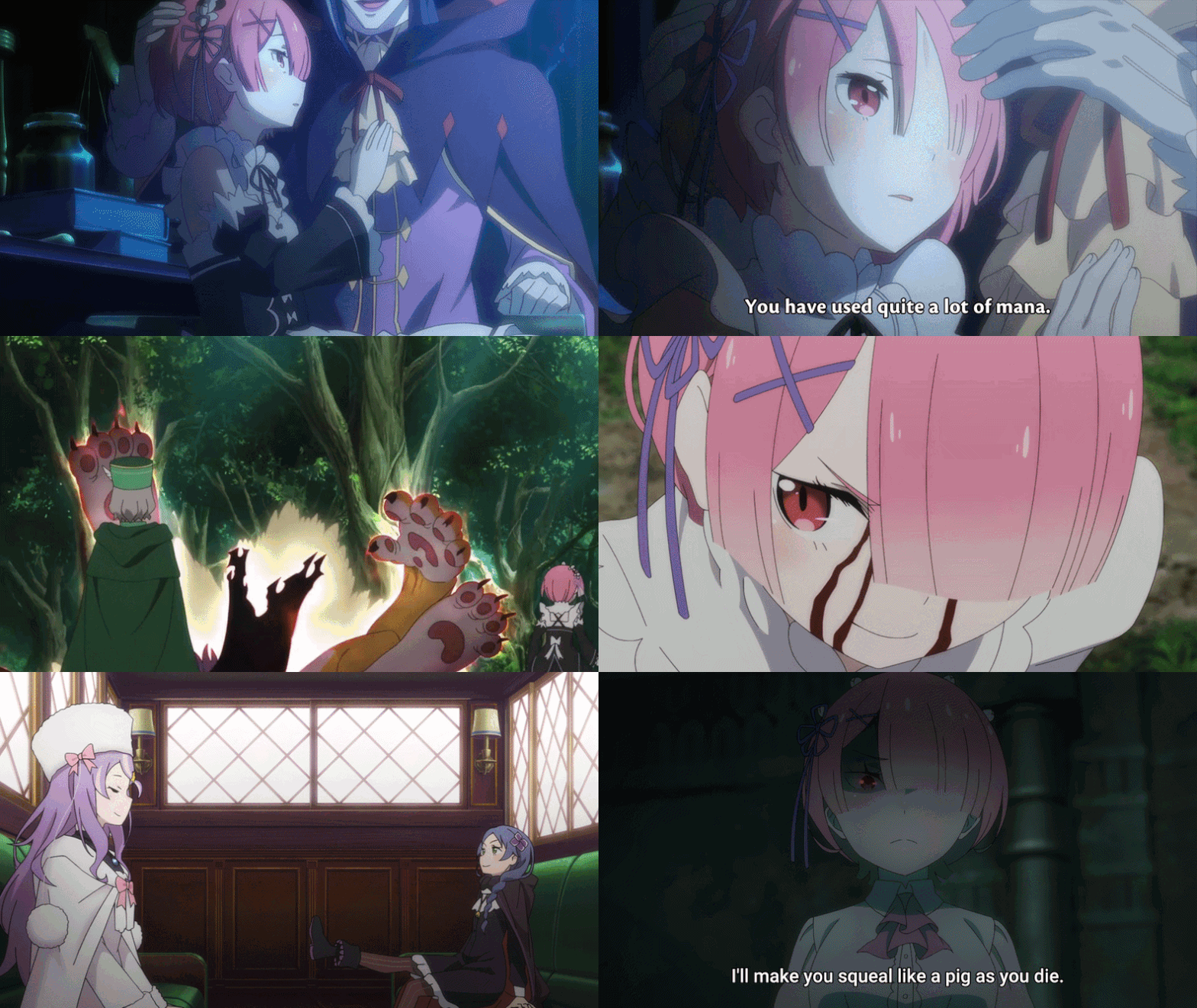
Ram knocked beast-form Garfiel down despite not having been attended to by Roswaal for multiple days, showing she’s a beast of a fighter given Garfiel’s sturdy, ripped body, and she did this while being heavily nerfed due to a lack of mana since she can’t naturally replenish her mana given she’d lost her horn. And since she’d hit Garfiel based on what she expected of his strength from his younger self given she literally stated that he’d grown stronger in Ep. 40, that means she possibly held back so as to not kill him, so now that she’s with Emilia, who can attend to Ram’s horn area, Ram won’t be as heavily mana-nerfed and can perhaps hit much harder, so she may only need 1 clean hit on Lye.
I guess in a previous episode, Julius, Emilia, and Ram all went up against Lye and couldn’t get a hit in on him, but Ram and Lye are now on a staircase where movement is much more restricted, so this negates Lye’s speed advantage, so as long as Ram can hit Lye just once, she’ll win the fight given Lye’s body is not as sturdy as beast-form Garfiel’s, meaning 1 hit would likely maul his body beyond repair, possibly killing him in the process, since Lye retreated after 1 clean hit from Emilia. This is surely partly why Ram said that Emilia’s face is one of her few objectively excellent traits in Ep. 80 since Emilia was the most likely candidate to restore her mana given Beatrice’s mana issues, Anastasia’s defective gate, Subaru’s broken gate, and Julius and Meili being mostly strangers to Ram, meaning Ram is feeling a lot of love for Emilia right now.
As for Lye teleporting behind Ram with Dorkel’s Teleport and stabbing her in the heart, ending the fight instantly, anyone who legitimately thinks that didn’t watch Ep. 80 or wasn’t paying attention given Lye teleported to rush right at Emilia, and it was Ram who kept Emilia safe by pulling her back. Some people can react to where mana moves or know when it dissipates, such as when Emilia sensed Subaru and Petelgeuse’s death in Ep. 23 when Julius killed them due to Petelgeuse having possessed Subaru’s body, and Ram has proven that she can physically react to Lye’s teleporting, so it’s not a problem for her, especially given she can use her wind magic to blow herself away.
Back to Reid, he’s thinking that Julius thinks this is a game as he’s not doing all he can. Reid appears to be able to evaluate someone’s worth or potential somehow, which is why he remarked about Julius’s mood affecting his battle strength and how he’d been expecting an explosion from Julius. Reid knows there’s more to Julius than just a chivalrous knight and just watching him pains him, but I expect that this is just Reid trying to draw out Julius’s inner potential. From those remarks, Julius thinks Reid sees some of himself in him, but that’s not the case as he just wants to draw out the passion, drive, and inner potential in him even if he outwardly says Julius is much more interesting without the mask. Julius then takes a blow, and says that he will never stop being who he is as he isn’t a legitimate child of the Juukulius family and was born as a commoner with no understanding of noble culture until his current father took he in. Reid taunts him by saying it’s just a façade, but Julius is steadfast, saying that rustic child may be the true him, but in fighting Reid, he overcame his inferiority complexity to Reinhard and can take his being a knight in stride for all eternity now in standing with proper posture and straightening out his clothes. It goes to show how Julius made knighthood his hope/aspiration to make something of himself from his more humble beginnings, and I find this development to be without a doubt the right one for this occasion instead of Julius fully embracing Juli, which is what I’d thought he’d do after Ep. 72 given Julius had stated in Ep. 51 that upon looking back the sky looks brighter when he takes on the role of Juli, as Julius was desperately clinging onto his role as Anastasia’s knight, so on this occasion, it was the correct way to resolve Julius’s character arc, and given I had remarked about Julius paralleling Season 2/Arc 4 Subaru in my Ep. 72 write-up, I’m kicking myself for not having seen it coming as to complete the parellel, Julius wouldn’t lose anything. Being more flexible to also don the face of Juli at times can be saved for a future arc as this probably won’t be the last of Julius’s character development. I’ll say more about what Julius has to say regarding this later, but now I want to focus on other stuff, such as him looking at Foxidna in Anastasia’s body with a smile determined to live up to being Anastasia’s knight. He then broke the contract between his spirits with the explosion effect marking the breaking of the bond before declaring that he loves them calling upon them to form a new bond with him, and they flare up to signify the new contact and grow bigger, showing that they not only accepted this new contract but evolved into the next stage of spirits, whatever that is.
Julius then has five of his spirits enter his body, calling it Al Clanvel, which seems to be some sort of magical enhancement given his flowing hair and shining cape as even amnesiac Subaru and the previous Subaru had a different hairstyle to denote the difference between them, so this technique, which we’ve never seen Julius use before, should indicate Julius is fighting at a level he’s never done before, backing up that his spirits evolved to the next level. I know the animation is quite uneven for this fight, but I appreciate the way Julius moves in the beginning of the fight even though his face was all scrunched up due to him keeping proper fencing form, which is to show Julius is taking his swordplay form very seriously, and that’s to be appreciated from the animators even if they likely didn’t have time to finish the animation for this fight.
After a bunch of fighting, Reid takes off his eyepatch, likely ’cause his eyepatch is purely cosmetic and is meant to hold him back much like Zaraki Kenpachi’s eyepatch in Bleach, which not only limited his field of vision but also sucked up his reiatsu, thereby weakening the force of his strikes and his durability. And we also see Julius’s Yin spirit, Nes, the one that didn’t buff Julius’s body, hang around Reid, probably to debuff him since many Yin spells are debuffs, such as the base Shamak spell Subaru had learned in Season 1.
Then it cuts to Foxidna, who says that she was born without an objective and didn’t know why she was created, which I guess could be possible despite all the suspicious behaviour we’ve seen from her as it’s possible she does have the Tome of Wisdom but didn’t receive any direction instruction from Echidna. We then see Foxidna in her original body in the original dragon carriage she’d met a young Anastasia in with Anastasia being downcast, not saying a thing throughout the whole interaction, which is meant to be a representation of Anastasia lying asleep within her od with the child representation being a depiction of her not wanting to grow up and face reality. Foxidna says that Anastasia boasted about being greedy and wanted to get her hands on everything with Foxidna reasoning that’s the exact reason she doesn’t want to come out since as she lies there, the outside world won’t affect her, meaning she wouldn’t forget Julius. To somebody who desires to have everything, the prospect of losing someone is terrifying. However, Foxidna goads Anastasia into coming out by saying she wouldn’t be so stingy as to allow someone else to witness Julius’s shining moment in her place, and after she hears a fateful sword clash, Anastasia decides to retake possession of her body, which is a big leap of faith in Julius, although I’m still skeptical of Foxidna given she spoke as if Julius’s victory was guaranteed, which is possibly an indication of her having read the future through the Tome of Wisdom even if it could just be having faith in him. And as Ep. 80 did already show that the Authority of Gluttony’s full effects don’t take effect right away, which is partially why Ram had been pained ’cause she could still feel a closeness to Emilia despite having forgotten her in addition to already losing her memories of Rem causing a huge gap in her memories, Anastasia was able to give her knight strong words of encouragement as she’d gotten down on all fours before rising to clasp her hands while crouching, doing a praying motion, showing just how much she desired Julius to win, and win he did as he’d stabbed through the form of Reid that had materialized from Roy’s being although I believe it’s highly likely Reid called himself the winner since he’d drawn out Julius’s strength with his rough treatment, and I shall delve into that later following a GIF after I remark about the difference between Anastasia and Rui.
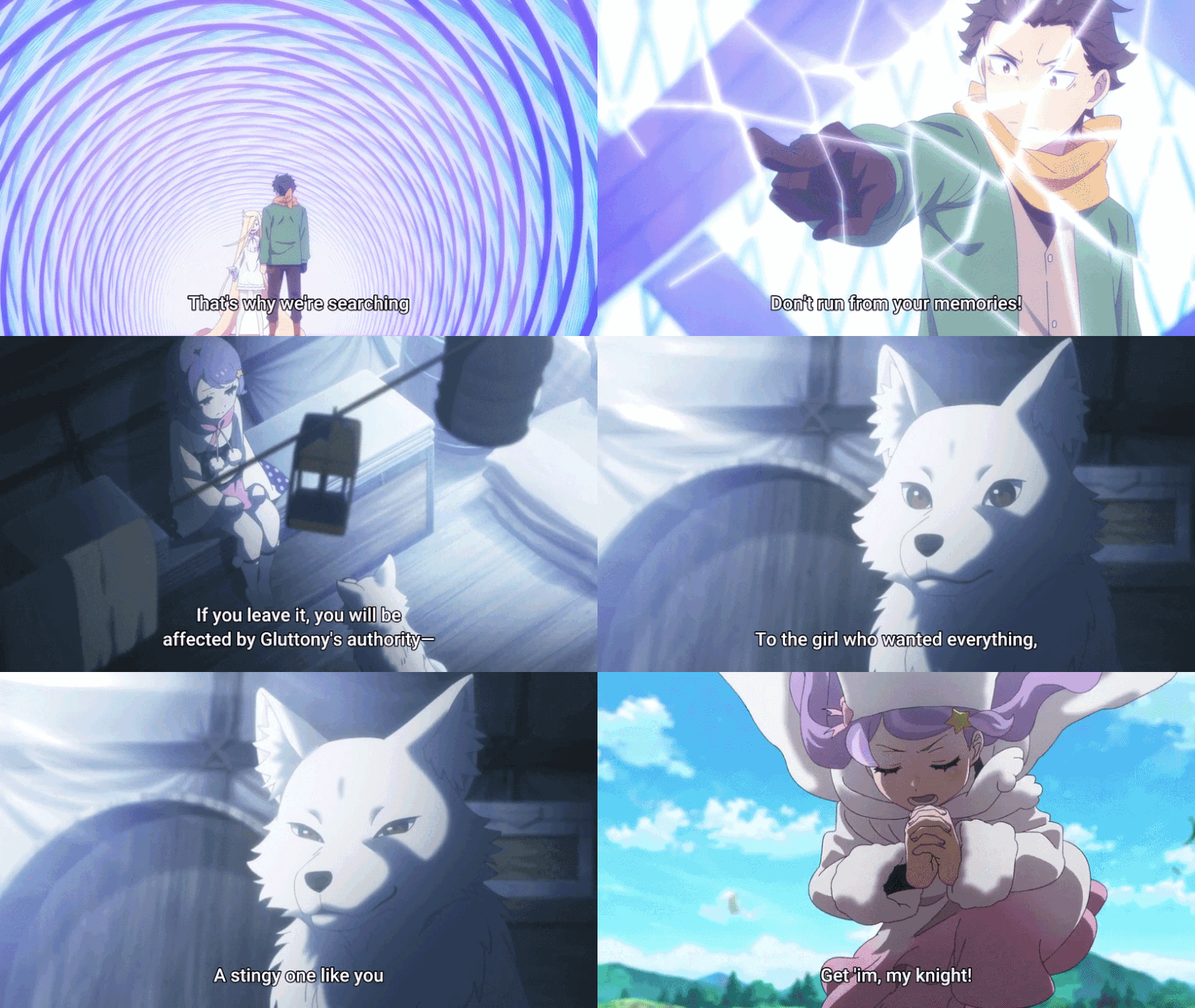
Anastasia “succeeded” where Rui failed in that she accepted pain and suffering and choosing to move forward regardless of forgetting Julius being painful for her. Foxidna was able to convince Ana to take control of her body again so that she could see Julius defeat Reid, which would truly be his brightest moment in combat, using that exact reasoning to coax her out as Ana wouldn’t want someone else to witness that moment in place of her, and win big Julius did, even if re-emerging resulted in her losing something dear to her, in her memories of Julius, which is something nobody can avoid in life.
Meanwhile, Rui, an actual child, was afraid of pain and suffering, which is why she searched for the one ‘rosy’ life that would make her believe life was worth living, which Subaru himself saw when he told her to not run from her pain and suffering ’cause she was freaking out over the pain of dying, which ultimately shattered her fantasy about death being a good experience and infinitely eating Subaru being something she desires as well as clinging to Subaru’s body to experience Return By Death. As Subaru had said, Rui’s gone, either ’cause she is incapacitated or dead, and that’s why there’s no more rampaging from the scary witch. Yes, I know many people can’t handle the pain of death, but it’s especially bad for Rui due to her innate dislike/fear of pain and suffering.
Anastasia got to see something that would truly delight her in accepting the pain of losing her memories whereas Rui was stuck wallowing in despair, possibly even in her final moments, deeply afraid of pain and suffering since she never accepted pain and suffering as a part of life even if it would take someone with much mental fortitude to be able to handle Return by Death and what was seen in the Books of the Dead, but one with such mental fortitude would be able to experience all Subaru’s experienced, the highs and the lows instead of cherry-picking the highs. Both Anastasia and Rui wanted everything in a sense in that Anastasia didn’t want to lose anything she’d acquired, and Rui wanted Return By Death, which she believed was everything she could ever ask or hope for, with Anastasia being treated to something good in Julius defeating Reid by accepting loss and suffering while Rui experienced what was actually her worst nightmare, a lot of pain and suffering, more than she could ever bear to handle due to her strong aversion to it. It’s ultimately why she was defeated ’cause she couldn’t accept pain and suffering as being something normal for one to experience. I believe viewers are meant to draw this comparison due to Anastasia’s child form in her od.
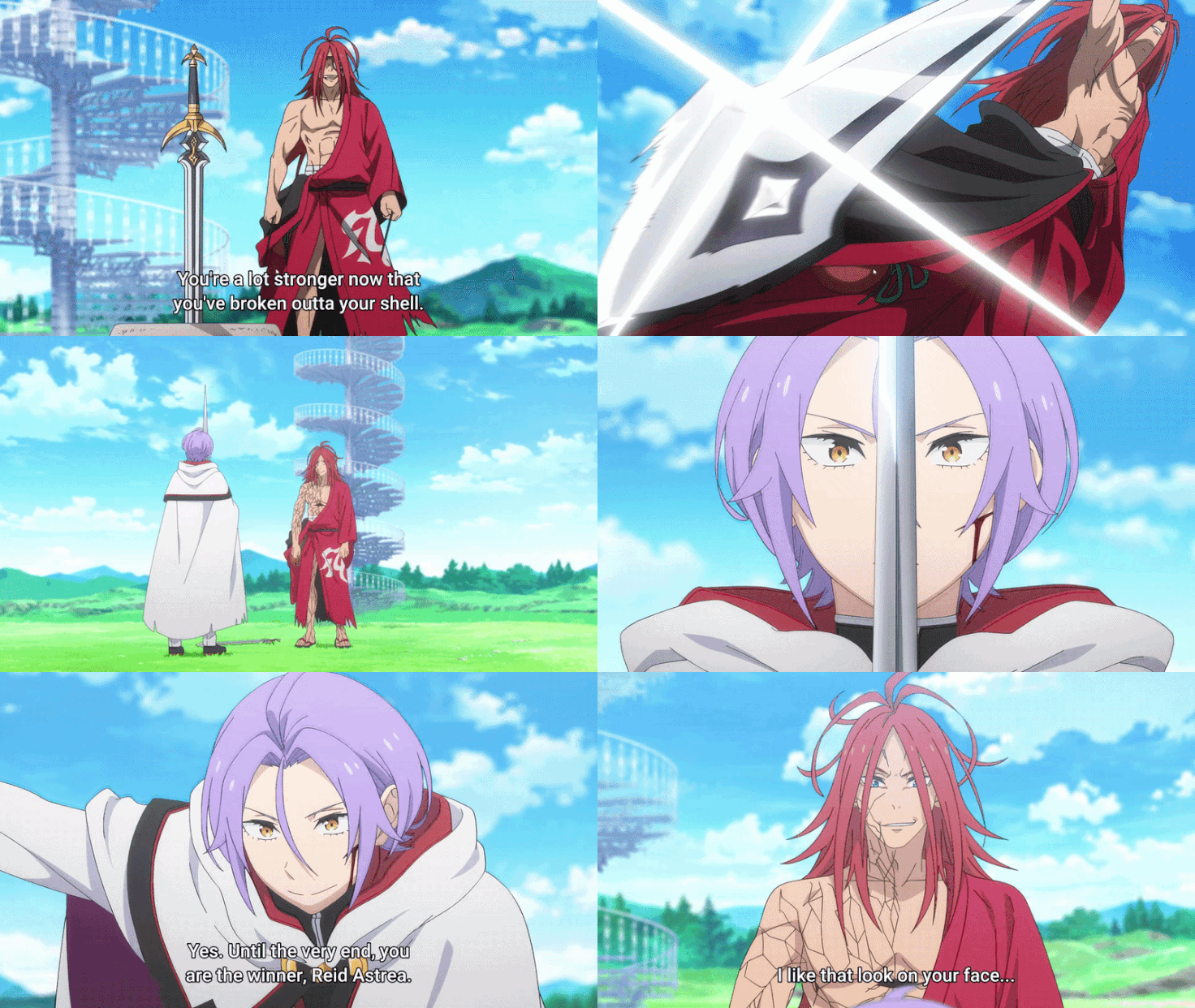
Regarding Ep. 83, while I’ve seen some people say that Julius obliged Reid in calling him the winner ’cause Reid literally said that Julius wouldn’t be able to even touch him if he’d fought at his full power in his original body, which was a fact, meaning Julius did that just to be the most courtly of knights with good manners to respect a legend since Reid acknowledged him by referring to Julius by his name, but it reads to me as kind of being too basic for Tappei’s writing, and there’s possibly more to it than just that, so Reid possibly intentionally drawing out Julius’s strength to the point that Reid could let loose and use the heavenly sword, thereby acknowledging him as a worthy opponent given how deferent he’d been of Reid in Ep. 70 may also factor into why Julius called Reid the winner.
Thus, I believe Julius may also have called Reid the winner since Reid attempted to coax him out of his shell, and so Julius obliged also ’cause Reid had given him a teachable moment that led to him moving beyond his inferiority complex to Reinhard and instead seeing that Reinhard is why he aspired to be a knight, and be a knight he shall due to him finding strength in knowing that some people, such as Subaru, find the idea of knighthood dazzling and is even the reason Subaru declared himself to be Emilia’s knight and actually becoming one in Season 2 was quite important to him. Thus, Julius may have also felt obliged to give his thanks to Reid as the examiner of the second exam for conquering the Pleiades Watchtower. That isn’t to say I defend Reid being a guy who casually sexually assaults women as seen with Emilia, just that a guy like him can decide to teach/help others, and I feel obligated as a fan to analyze his character instead of say, “Reid is just a dumbass simpleton who bullies the weak. That’s all there is to it.” as that’s not how Tappei writes his characters given what we’ve seen from these last 4 seasons.
I believe Reid Astrea bears some similarity to Priscilla, in that much like how she needled at Liliana to get Liliana to push back and draw upon her pride in her family history and her own skill as a bard to accept accompanying Priscilla to her fight against Sirius Romanee-Conti, Reid was doing a similar thing to Julius even if he’d never admit to it and rather say, “It ain’t that complicated.” much like Priscilla hides her intentions at times in remarking that it’s about amusement when amusement had nothing to do with it, and I think this is pretty apt given both are very proud hotshots given Reid when he still lived having been a beast of a fighter and Priscilla having beaten a Sin Archbishop in a 1v1 situation fair and square with Sirius even having tried to cheat by using Tina as a live hostage after it appeared that Priscilla had her on the ropes demonstrated she’s a very capable fighter.
Priscilla and Reid may not always tell you what they actually want, much like when Priscilla had asked Subaru to lick her foot when that was the worst possible thing he could’ve done in that situation since what she wanted was for him to stand up to her, and Reid having hit Julius where it hurt to draw out his strength and also having told amnesiac Subaru that he can’t swing a sword for shit, when followed by amnesiac Subaru protesting about his inability to use a sword, Reid said, “That ain’t the point.” as what he meant was that Subaru needs his full toolset in using a whip offensively, having proper teamwork with Beatrice, and using his Authorities properly since that comment was about amnesiac Subaru’s poor usage of his weaponry, not a literal comment about his sword skills.
And don’t forget that Reid literally told amnesiac Subaru in Ep. 74 that he shouldn’t have have ran from his friends since they’re his people (his words were that he chose to mob with them or something like that) and how it’s crazy for amnesiac Subaru to go straight to him, so Reid’s not completely against telling someone straight up what they need to do even if he was more cryptic when he told amnesiac Subaru to think for himself when he asked why Reid could come down from the second floor in Ep. 75, so he’s not a guy completely against imparting a lesson to somebody else. I wonder if Reid and Priscilla may have some special ability to evaluate people’s potential given their similar but not always 1-to-1 behaviour with their attempts to draw out people’s potential in a roundabout way, which I believe is backed by how in Ep. 80, when Julius asked why Reid is so fixated on him, Reid threw it back at him, saying that it’s Julius and Subaru who have a reason to fixate on him, making it seem like they’re at fault when he’s the one with the fixation on them, and Shaula may have just fundamentally misunderstand Reid’s intentions when she said that he enjoys bullying the weak.
When Reid fully disappeared, we’re left with Roy’s body, likely ’cause Reid’s new body had formed from Roy’s life energy/being rather than his actual body as the subtitles indicated, and they’ll probably at least need to bind him up tightly so as to prevent any mischief although I don’t know if rope will be enough given all the abilities he can draw upon whenever he regains consciousness. Foxidna is back in her normal fox form instead of the scarf form she was previously in, and Julius greets Anastasia, telling her that it’s nice to meet her, that he’s her #1 knight, Julius Juukulis, and that he’d dedicated his sword to her and all his strength to support her ambition, to which she replied that she doesn’t remember any of that, but she knew immediately upon laying eyes on him that she wanted to make him hers.
Then Emilia arrives at the tower’s first floor at last, and it’s actually up above the clouds, making me believe that I was perhaps correct that the space for the second exam on the second floor where Reid was was indeed in another dimension and that this floor may also lie in another dimension. On this floor lies Volcanica, the Divine Dragon that was one of the entities who sealed Satella, and apparently he made a covenant long ago in which he tests the will of those who reach this floor, whatever that means. I believe this perhaps indicates the folklore about Volcanica lying beyond a Great Waterfall is false given they’re still in Lugunica unless the top of this tower isn’t within Lugunica, which would be an interesting development, I guess.
Overall, I’d say this was definitely one of the best episodes of the season pound for pound, and the people slagging it due to the unfinished animation from the Reid/Julius fight failed to understand just how impactful and well-written it was, and I personally believe it to be a Top 5 episode of Re:Zero Season 4.
Here’s Re:Zero Break Time 83:
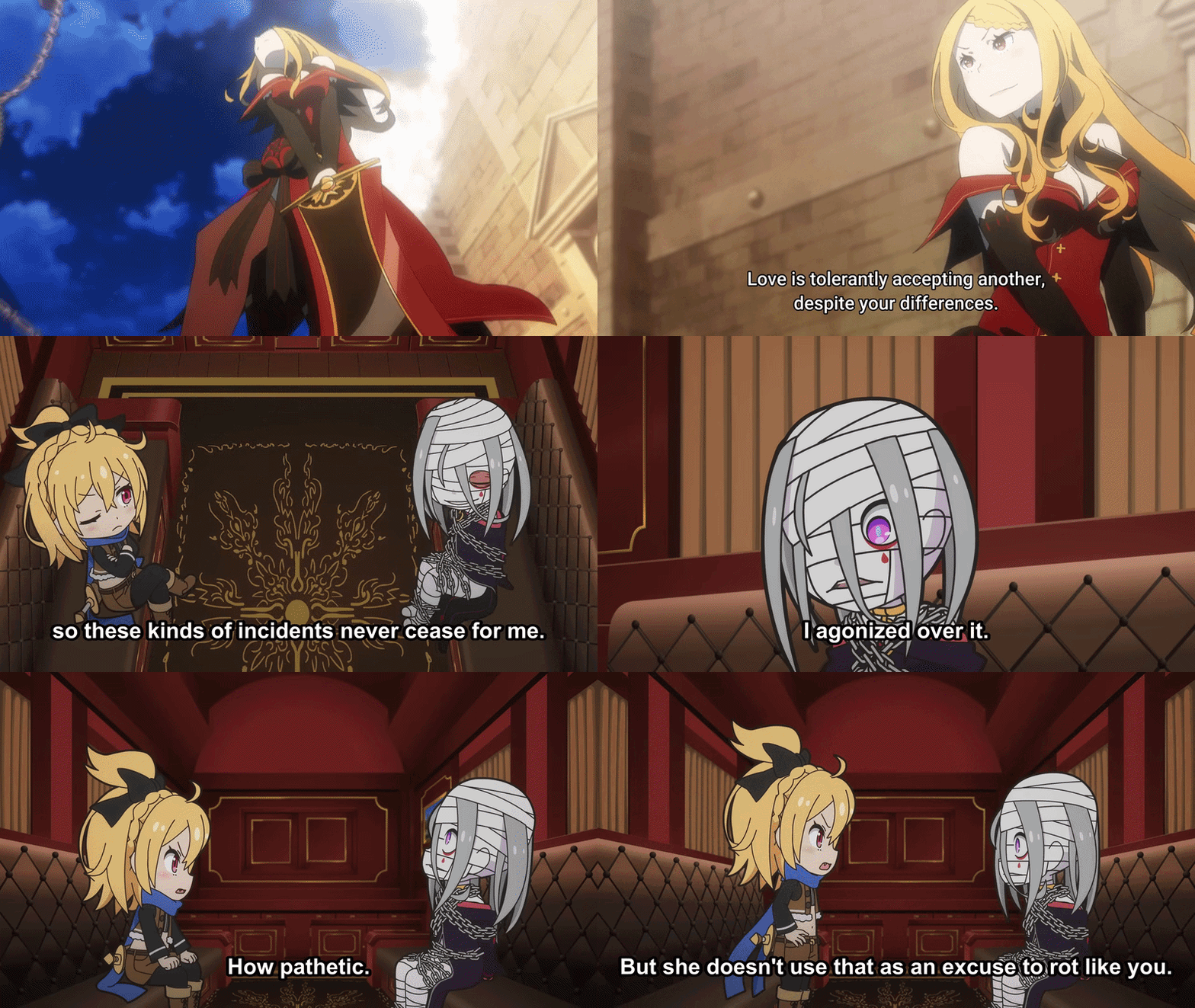
This one is a flashback to four hundred years ago, and while Reid is literally shown bullying Shaula, I don’t think it should be taken as a sign of anything conclusive regarding his supposed bullying of the weak since we know Shaula was literally taking shots at him beforehand, so he had a reason to be unhappy, not that I’m suggesting that women deserve to be assaulted. From the short, Shaula chastises Alec Hoshin, who was first shown in the Isekai Quartet movie, saying he failed his parental responsibilities given how Reid is acting, which suggests that Alec may have taken Reid in or something along those lines, and so Alec decides to teach Reid a lesson after Shaula uses the phrase “Today’s the youngest you’ll ever be” incorrectly with Alec pouring something spicy into an alcohol drink while having Shaula hold a cup of water that he drinks himself after Reid takes Alec’s drink after he’d already had many drinks, depriving Reid of the relief he wanted. This episode showed my speculation regarding Ep. 73 that Flügel and Satella were lovers due to Shaula having said that she wouldn’t mind becoming the half-witch’s apprentice regarding Emilia, a likening of Emilia to Satella, was on the right track given Shaula called Satella her rival in love.